
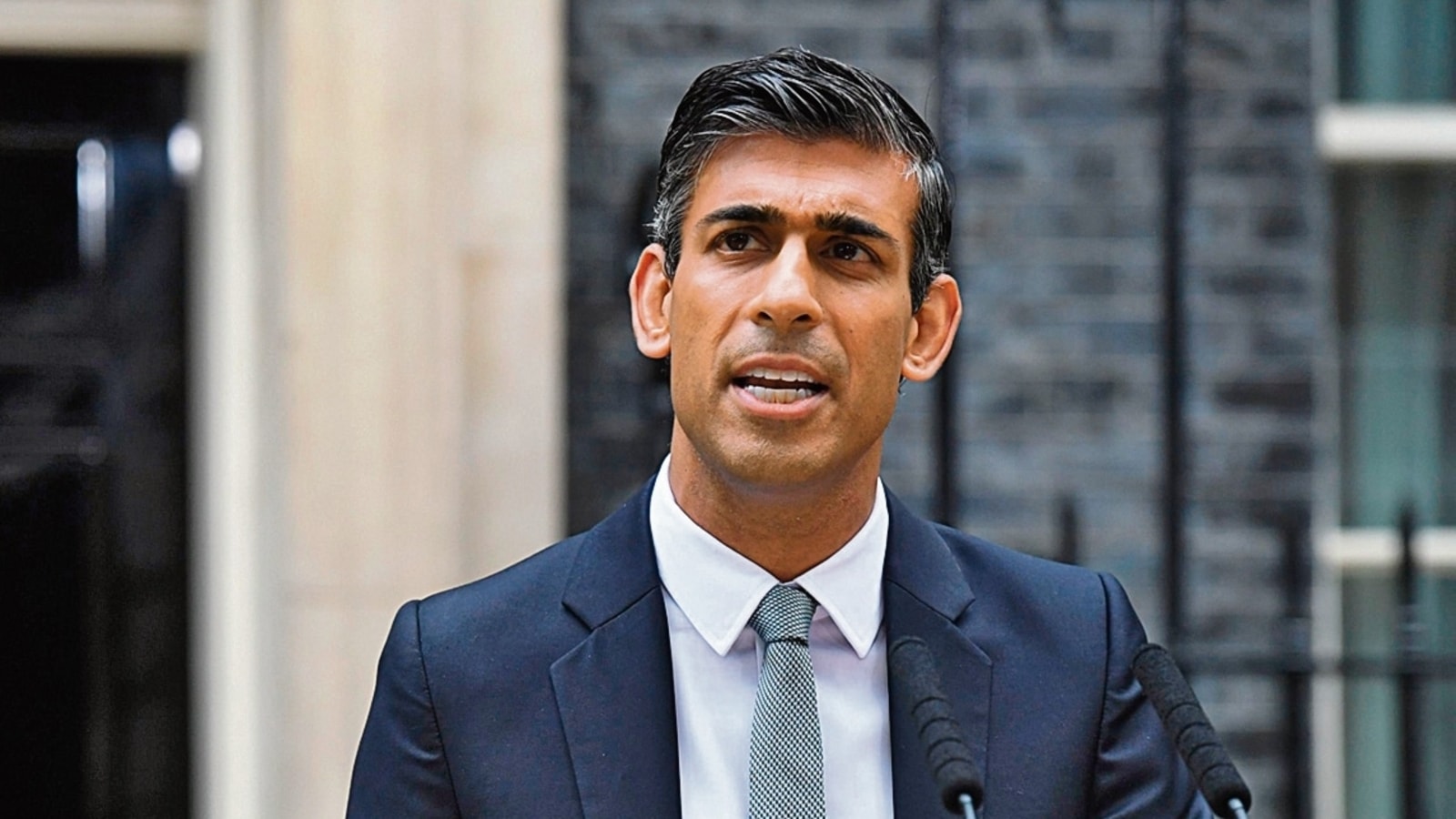
British Prime Minister Rishi Sunak on Wednesday defended the reappointment of her party colleague Suella Braverman as interior minister, dismissing the possibility of early elections and deflecting attacks from the opposition at her first meeting in parliament, saying that “hard decisions” for the economy would soon be made. Full day as Premier.
Altar and the Conservative Party have come under pressure to call a general election, not until 2024, as the UK has its third prime minister in less than two months and each follows significantly different policy lines from the previous one.
Following the meeting of his new cabinet, Sunak held his first parliamentary encounter as Prime Minister with Keir Starmer, leader of the Opposition Labor Party, whose party currently holds a significant lead in opinion polls. “We will have to make tough decisions to restore economic stability and confidence,” Sunak told lawmakers, fending off Starmer’s call for election. “I will always protect the most vulnerable. We did it with Covid and we will do it again,” added the former finance minister.
Finance Minister Jeremy Hunt, who is in Sunak’s cabinet along with several other senior ministers, said Monday’s planned “medium-term financial statement” is no longer so urgent.
Hunt told reporters that instead, a full budget statement will be made on November 17th, outlining the new government’s tax and spending plans. Markets were unaffected by the delay, suggesting that Hunt and Sunak have successfully calmed investors’ nerves.
This contrasted with Truss’s era, whose comprehensive tax cut plan triggered a crash in markets and the pound, raising fears about the country’s financial health. Truss stepped down as the UK’s shortest-serving prime minister in history, succeeding him as the youngest and first Hindu leader since 1812.
The change in leadership has raised questions about the legitimacy of such decisions. “The only time[the Altar]took part in a competitive election was smashed by the former prime minister, who himself was beaten by a lettuce,” Starmer said, referring to a media show broadcast live by a newspaper in the United Kingdom. lettuce on a table, apparently watching whether the vegetable rotted first, or whether it left the office when it came under increasing fire due to Truss’s policies. The lettuce was intact when Truss resigned last week.
In addition to the economic challenges the Sunak administration faces, it will need to balance intra-party politics and international commitments. The main concern here stems from the fact that he has appointed Braverman in one of his four best ministerial posts.
Braverman, 42, resigned from former prime minister Truss’ cabinet last week for violating ministry law by sending secure information from his private email. Starmer asked Sunak, “Was the interior minister right to resign for security breach last week?” she asked. He pointed out that Sunak promised to lead with “honesty, professionalism and accountability”, but appointed a woman who had to quit her job a week ago to head the Ministry of Interior.
“Did the authorities express their concerns about the decision to appoint him?” Starmer asked Altar. Regarding Braverman’s reappointment, Sunak said he made a “error of judgment” but realized the “mistake”.
Opposing the Labor leader, Sunak said Braverman would focus on “destroying criminals” and “defending the borders”, while the opposition party (Labour) would remain “soft on crime” and favor “unrestricted immigration”. A second complication with Braverman is Britain’s stance on trade deals with India. The UK is in talks with India on whether to increase the number of business visas for Indian citizens as part of a potential free trade agreement, a stance that risks causing friction with Braverman.
Business visas remain an “active negotiation” area in the debate, commerce minister Greg Hands told the House of Commons on Wednesday. He said negotiations on most of the deal have been completed. The government has been trying to highlight the benefits of Brexit by adding it to new trade deals it has made since leaving the EU, and a deal with India would give exporters access to a billion more consumers, Hands said. But visa regulations could also put Sunak on a collision course with Braverman, who has recently expressed concerns about the regulations. Braverman, a hardline Brexiteer whose parents are also of Indian descent, told Spectator earlier this month: “I have some reservations. Look at immigration in this country – the largest group of people left over is Indian immigrants.”
However, Hands suggested that increasing the number of temporary work visas for Indians is a separate issue from permanent immigration. “In the trading space, what we’re talking about is mod four edits. These are not immigration regulations. “These are about business visas, not permanent residence,” he said.
We are working towards the best deal for both parties and we will not sign until we have an agreement that is fair, mutual and ultimately in the best interests of the British people and the UK economy.”
.
Aucun commentaire
Enregistrer un commentaire