
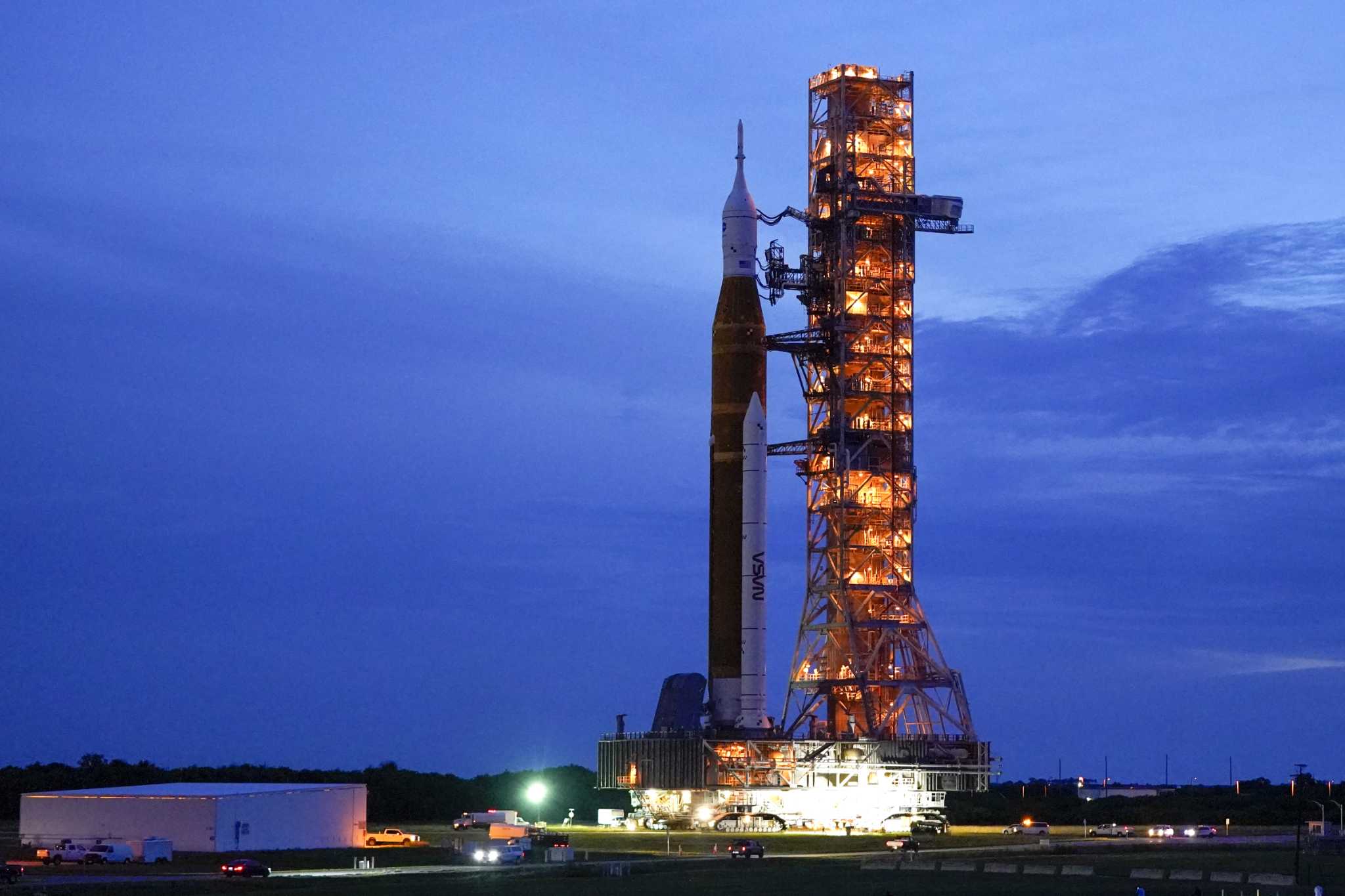
After several unsuccessful attempts to launch NASA’s Artemis I lunar mission that will immortalize Arturo Campos of Laredo, a new date has been chosen – this time the first nightly attempt.
Artemis I has a new target date, according to NASA. With the takeoff of the Space Launch System carrying the Orion spacecraft on Monday, November 14, it is scheduled to open at 12:07 EST with a launch time of 69 minutes. This launch would have resulted in a mission time of approximately 25 1/2 days with a splashdown in the Pacific Ocean on Friday, December 9th.
There have been three attempts before. The first scheduled launch date was delayed due to a bad sensor, the second was delayed due to hydrogen leaks, and the third was delayed due to Hurricane Ian.
The Campos family, a NASA engineer who helped save the Apollo 13 crew and mission, were pleasantly surprised as they worried the news might have been delayed until next year. And after some pessimism surrounding other launches, some family members are planning a trip to Cape Canaveral, Florida, to see it in person.
“I hope they manage to fix all the problems and throw them out,” said Leticia Campos Maddix, one of Campos’ daughters. “It will be wonderful to watch the night launch and see the fire so bright in the night. It will be great to send my father’s namesake so that even the heavens can see it. I can’t wait!”
Another of the Campos brothers said he is extremely excited about the new launch date and is happy that it will be night as it will offer a better view.
“We are excited and look forward to seeing it at night to watch this launch light up the sky,” said Yvette Campos Brewer. “We all believe it will be a breathtaking sight. Honestly, it was worth the wait to watch at night. We all would rather the launch be at night than during the day. We wouldn’t have to worry about the sun hitting us and trying to stay away from the heat. We’re really looking forward to it!”
NASA says it relied on information from the National Oceanic and Atmospheric Administration, the U.S. Space Force, and the National Hurricane Center to assess and monitor conditions for the region.
NASA stated that all necessary corrections have been made and hope to see a success this time. Reviews and analysis last week confirmed that minimal work was required to prepare the rocket and spacecraft for launch on Launch Pad 39B at Kennedy Space Center in Florida following Hurricane Ian return.
“Teams will perform standard maintenance to repair minor damage to the foam and cork in the thermal protection system, and will recharge or replace the batteries on the rocket, several secondary payloads, and flight termination systems,” NASA said. “The agency plans to return the rocket to the launch pad by Friday, November 4th.”
“I can’t wait to go and see it launch. I can’t imagine it cleared this time,” said Deanna Campos Ranck, Campos’ third daughter. They’ve had some time to untangle the curls and for a night launch – what an amazing launch it’s going to be. This time I will be there. God willing!”
Their daughters said that they only wanted to see the mission begin and that after their father’s death he became immortal by sending the ritual “Commander Campos” into the sky.
Campos is an important figure in NASA history. A service module on the Apollo spacecraft helped bring Apollo 13 and his crew home after the oxygen tank exploded. Not being recognized historically for this feat, he received overwhelming support by dominating a voting contest to name the moonikin, who would ride in honor of Artemis I. It has since even appeared in its own comic series and an upcoming video game on space flight simulations, and the launch day will be called ‘Commander Moonikin Campos Day’ in Laredo.
Moonikin, which will symbolically display the Campos’ daughters with their names on a flash drive for the journey, will be part of the uncrewed flight test of the Orion spacecraft and the Space Launch System rocket as an integrated system prior to crewed flights. to the moon, according to NASA. Inside, he will occupy the commander’s seat and will wear the Orion Crew Survival System suit, the same as the Artemis astronauts will wear. It will have a pair of radiation sensors, among others that can measure acceleration and vibration data during the journey.
The data collected will be for the Artemis II mission, which will send a crew around the moon for the first time in over 50 years.
If the launch is eventually delayed or canceled again, NASA has also created several backup opportunities for Wednesday, November 16 at 1:04 am and Saturday, November 19, at 1:45 pm. -clock startup windows.
jorge.vela@lmtonline.com
Aucun commentaire
Enregistrer un commentaire