
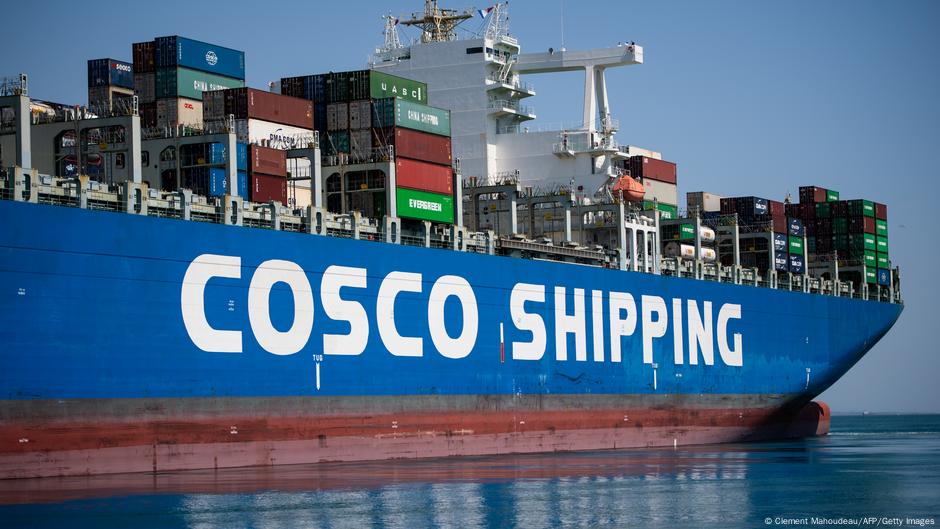
The German Cabinet agreed on a settlement in the dispute over the Chinese Cosco’s purchase of a stake in the Hamburg port terminal, the Ministry of Economy and Climate Protection said in a press release Wednesday. is a threat to public order and security.”
The settlement allows Chinese shipping giant Cosco to buy a “under 25%” stake instead of the originally planned 35%. The initial deal was widely criticized for giving Cosco a large stake in Germany’s largest port.
A dispute over the proposal between German Chancellor Olaf Scholz and several government ministries led to the negotiation of the newly announced compromise.
Economy Minister Robert Habeck was one of the politicians who voiced concerns about Germany selling critical infrastructure to China. But supporters of the deal claim it will allow the port to remain competitive against others as the race for Chinese trade increases.
The decision came as Germany tried to strike a balance between maintaining ties with China, its biggest trading partner, and avoiding over-reliance on it.
Tensions between China and Western countries have deteriorated recently. During a NATO summit last summer, member states declared China a “security issue”.
Scholz harshly criticizes revised deal review
Scholz dismissed criticism of the decision to allow China to purchase a container terminal in the port of Hamburg. A government spokesman said Wednesday that the chancellor had made it clear that the offer was not about selling the port, but “only” buying a stake in a single terminal.
According to the statement, the small shareholding did not create any strategic opportunities for the Chinese company to exercise influence.
The spokesperson said the decision had nothing to do with the Chancellor’s visit to China.
A Foreign Ministry spokesperson said the ministry, like other ministries, has openly expressed its concerns about the decision.
“The Cabinet’s decision cleared all concerns,” said a spokesperson for the German Interior Ministry.
In a Cabinet memo previously seen by the Reuters news agency, the German Foreign Ministry warned that an investment by Cosco would “disproportionately expand China’s strategic influence on German and European transport infrastructure and Germany’s dependence on China”.
“On behalf of the Ministry of Foreign Affairs, I draw attention to the significant risks that arise when elements of European transport infrastructure are affected and controlled by China, while China itself does not allow Germany to join Chinese ports,” the memo raised by Europe said. State Minister Anna Lührmann, read.
In this respect, the purchase of the container terminal has not only an economic, but also a geopolitical aspect,” he said.
In the event of a crisis, investment would likely allow China to instrumentalize some of Germany’s – and thus Europe’s – critical infrastructure, the note continued.
A government official told Reuters that the note was backed by the Greens and Free Democrats (FDP), which rule in coalition with the Social Democrats (SPD) before the Cabinet makes a final decision.
Marcel Fratzscher, head of the German Institute for Economic Research (DIW), also criticized the proposed compromise.
“The German government repeats the mistake of many previous federal governments by prioritizing short-term economic interests over long-term prosperity, prosperity and stability,” he told Reuters news agency.
Sino-German relations on the agenda
The news of the reconciliation came as Scholz prepared to visit China next week.
During Angela Merkel’s nearly 16-year term as chancellor between 2005 and 2021, Sino-German trade ties have improved, and Merkel has generally preferred engagement with Beijing rather than conflict.

But the current coalition government under Scholz has seen some voices calling for a tougher stance on Beijing. Foreign Minister Annalena Baerbock, a member of the Green Party, was particularly keen to appeal to China on human rights issues such as the treatment of Uighur Muslims in Xinjiang.
los, rmt/es (dpa, Reuters)
While you’re here: Every Tuesday, DW editors collect what’s going on in German politics and society. You can subscribe here The weekly email newsletter for the Berlin Briefing.
Aucun commentaire
Enregistrer un commentaire