
/cloudfront-us-east-2.images.arcpublishing.com/reuters/GTWVTYFH6VI4FDP4ISD7S5624Y.jpg)
October 28 (Reuters) – Elon Musk takes ownership of Twitter Inc (TWTR.N) with brutal efficiency, sacking top executives, but providing little clarity on how he will achieve the goals he has outlined for the influential social media platform.
After closing the $44 billion acquisition on Thursday, he tweeted, “Bird has been released,” citing Twitter’s bird logo, citing the company’s desire to see it have fewer limits on the content that can be posted.
The CEO of electric car maker Tesla Inc (TSLA.O) and self-identified absolutist also said he wanted to prevent the platform from becoming an echo chamber for hatred and division.
Other goals are to “beat” Twitter spam bots and make public the algorithms that determine how content is served to its users.
However, Musk did not elaborate on how he will achieve all this and who will run the company. He said he plans to cut jobs and worries Twitter’s 7,500 employees about their futures. He also said on Thursday that he bought Twitter not to make more money, but “to try to help the humanity I love.”
In an ongoing poll on the Blind messaging app about whether Twitter employees should be hired within three months, less than 10% voted “yes”. 38% of the 266 respondents said “No” and more than 55% chose the “popcorn” option. Blind allows anonymous messaging to post complaints where employees can sign up with their corporate email.
According to sources familiar with the matter, Musk fired Twitter CEO Parag Agrawal, CFO Ned Segal and head of legal affairs and policy Vijaya Gadde. He accused them of misleading him and Twitter investors about the number of fake accounts on the platform.
Agrawal and Segal were at Twitter’s San Francisco headquarters and escorted when the deal closed, sources said.
Musk, who also runs rocket company SpaceX, plans to become CEO of Twitter after completing the acquisition, and also plans to lift permanent bans on users, Bloomberg cited a person familiar with the matter.
Twitter, Musk and executives did not immediately respond to requests for comment.
‘HEAD TWIT’
Before closing the deal, Musk walked into Twitter’s headquarters on Wednesday with a big grin and a porcelain sink, then tweeted “let it sink”. Twitter changed profile description to “Chief Twit”.
It also sought to placate employees’ fears of massive layoffs and assured advertisers that its past criticism of Twitter’s content moderation rules wouldn’t hurt its appeal.
“Twitter, frankly, can’t be a public view of hell where everything can be said without any conclusions!” Musk said in an open letter to advertisers on Thursday.
As news of the deal spread, some Twitter users indicated that they wanted to walk away immediately.
“If Musk acts the way we all expect him to do, I’ll be happy to leave in a heartbeat,” said one user with the @mustlovedogsxo account.
European regulators also echoed past warnings under Musk’s leadership that Twitter must comply with the region’s Digital Services Act, which imposes heavy fines on companies if they don’t control illegal content.
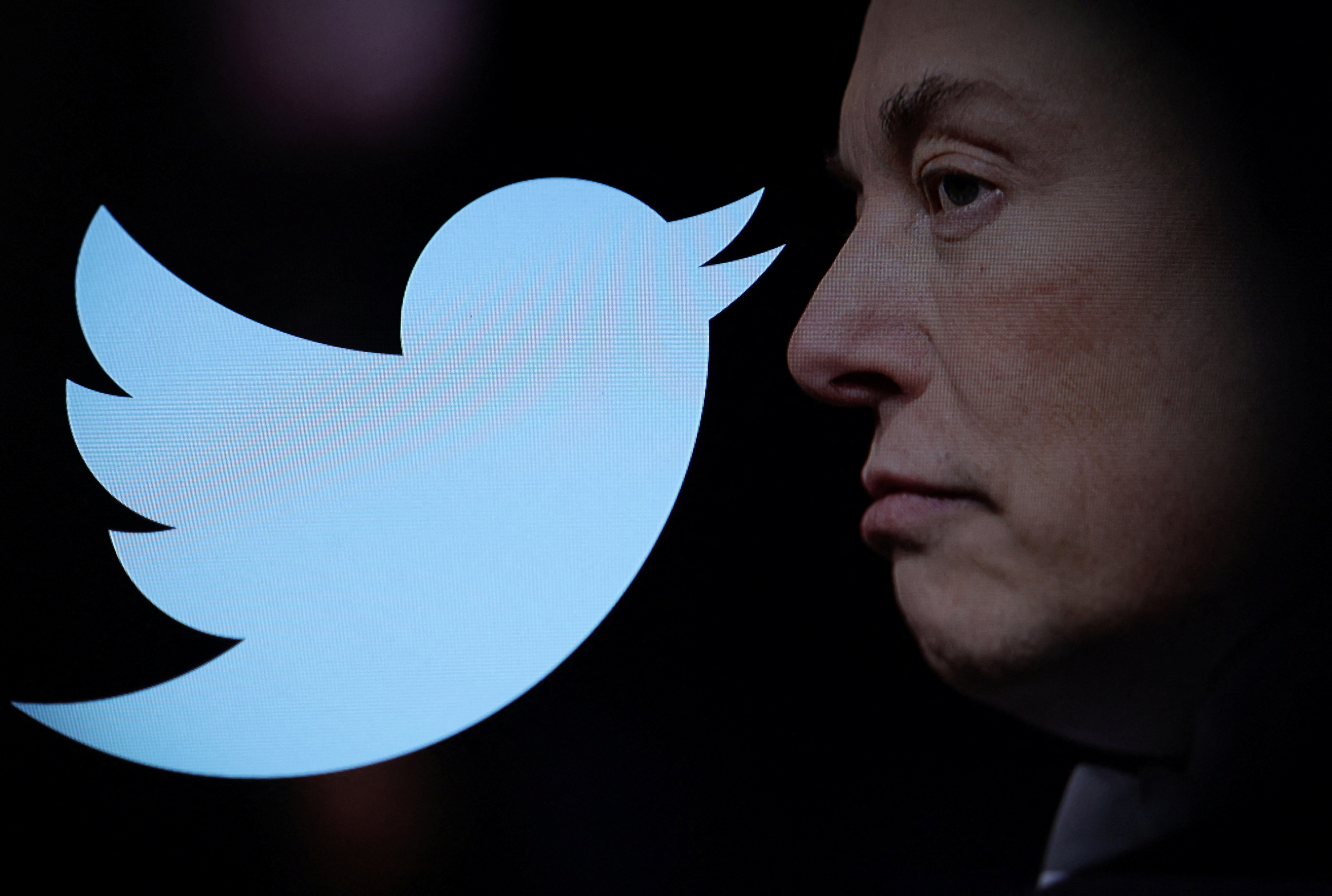

[1/2] This image, taken on October 27, 2022, shows the Twitter logo and a photo of Elon Musk with a magnifying glass. REUTERS/Dado Ruvic/Illustration
“In Europe the bird will fly by our EU rules,” EU industry chief Thierry Breton tweeted on Friday morning, posting a short video of Breton and Musk replying to themselves after their meeting last May.
Bollywood actress Kangana Ranaut, who was banned from Twitter next year for violating hateful and abusive behavior rules, applauded Musk’s takeover of Instagram as a sign of the challenges ahead, and shared fans’ requests for her account to be restored.
Musk also said that he would undo the ban on Donald Trump, which was lifted after the attack on the US Capitol in May. The former US president said he would not return to the platform and instead launched his own social media app, Truth Social.
A representative of Trump did not immediately respond to a Reuters request for comment.
Musk said he sees Twitter as a foundation for building a “super app” that offers everything from money transfers to shopping to ride-hailing.
But Twitter is struggling to engage with its most active users, which is vital to the business. These “heavy tweeters” make up less than 10% of total monthly users but account for 90% of all tweets and half of global revenue.
a SAGA
The road to the realization of the deal was full of twists and turns that cast doubt on whether it would ever happen. It started on April 4, with Musk announcing his 9.2% stake on Twitter, becoming the company’s largest shareholder.
The world’s richest person later agreed to join Twitter’s board of directors, but gave up at the last minute and instead offered to buy the company for $54.20 per share, an offer that Twitter thought could be one of Musk’s marijuana jokes.
Musk’s offer was genuine, and for just one weekend in late April, the two sides reached an agreement on the proposed price. This happened without Musk doing any due diligence on the company’s confidential information.
In the weeks that followed, Musk had second thoughts. He filed a public complaint about Twitter’s spam accounts, and his lawyers accused Twitter of failing to comply with requests for information on the matter.
The harsh outburst resulted in Musk telling Twitter on July 8 that he would terminate the deal. Four days later, Twitter filed a lawsuit to force Musk to complete the purchase.
By then, the stock market had fallen amid concerns of a potential recession. Twitter blamed the buyer’s remorse, arguing that it wanted to exit the deal because it thought Musk had overpaid.
Most legal analysts said Twitter has the strongest arguments and will likely win in court.
On October 4, Musk took another U-turn, offering to close the deal as promised, while he was about to be fired by Twitter’s lawyers. He managed to do this just one day before the deadline given by a judge for not appearing in court.
Twitter shares ended trading at $53.86, up 0.3% on Thursday, just below the agreed price. The stock will be delisted on the New York Stock Exchange on Friday.

reporting by Sheila Dang and Greg Roumeliotis in New York; Additional reporting by Tanvi Mehta in New Delhi and Miyoung Kim in Singapore; Editing Nick Zieminski, Edwina Gibbs and Matt Scuffham
Our Standards: Thomson Reuters Trust Principles.
.
Aucun commentaire
Enregistrer un commentaire